





Zinc is an industrial metal widely used in construction. It is never used by investors for long-term capital storage. In terms of profit making, mining stocks and futures trading are of interest.
The key indicator of zinc price is the cost per tonne under the futures contract at the London Metal Exchange (LME).
At present, the zinc market is in the surplus phase. This is due to lower demand from China and European industry. Therefore, the cost per tonne is unlikely to increase in the coming years.
Experts predict an increase in the metal's price over the next few decades. Yet, it is predicted to be quite moderate compared to other commodities, such as gold. According to the International Zinc Association, the main factor driving quotations up will be an increase in demand.
A summary of the aluminum price prediction is given below:
Quotes rise when the market expects supply disruptions or inventory reductions. The metric ton price falls when there is weak demand. Increased aluminum production is also a bearish factor.
Today the zinc market is dominated by bulls. Quotes are in an ascending channel. This is due to favorable external factors. Technical analysis tools also give buy signals on the lower timeframes.
Traders receive a "buy" recommendation on the lowest timeframes. This assessment is given by both moving averages and the most popular indicators. Among the last ones are the Williams Percent Range, Relative Strength Index, and Stochastic Oscillator.
On medium and senior timeframes, technical analysis tools show sell signals. On the monthly table, such an assessment is given by the main indicators, including:
The prevailing trend is best determined on large timeframes. Smaller time frames help to find the optimal moment to enter a position. Their combination, according to many traders' views, increases the probability of success.
Given the above, moderate falling of quotations should be expected. A 5-7% drop in prices is possible. There is also a high chance that the sideways trend will go on and the cost per tonne will fluctuate in a narrow range. There are no signals for the emergence of a clearly defined bullish trend.
The table below gives the quotations of zinc and the most popular metals. It allows one to track the way quotations changed for a day, month and year. It will help to quickly compare zinc profitability with the main competing assets.
| Price | Day | Month | Year | Date | ||
| Gold | 4351.1 USD | -27.28 | -0.62% | -4.60% | +18.07% | 21.09.2026 |
| Silver | 66.25 USD | 0.00 | 0.00% | -3.92% | +53.79% | 21.09.2026 |
| Palladium | 1306.01 USD | +0.58 | +0.044% | -3.66% | +12.11% | 21.09.2026 |
| Platinum | 1803.01 USD | +0.85 | +0.047% | -4.00% | +27.24% | 21.09.2026 |
| Copper | 6.67 USD | 0.00 | 0.00% | +1.85% | +45.01% | 21.09.2026 |
| Aluminum | 3290.24 USD | -1.44 | -0.044% | +2.61% | +23.25% | 21.09.2026 |
| Zinc | 3927.04 USD | -13.02 | -0.33% | +3.58% | +37.46% | 21.09.2026 |
| Nickel | 16055 USD | -35.00 | -0.22% | -3.69% | +6.08% | 19.09.2026 |
The long-term zinc forecast is bullish. Experts are optimistic that the metal quotations will exceed the current ones by 2050. But the maximum forecasted level barely reaches $10 thousand per tonne. This makes it impossible to consider the asset promising for long-term investors.
Stocks of mining companies may be of separate interest. Most of the issuers work with several metals at once. Investments in them are a diversified bet on market growth, not on a single commodity.
Experts note that in the long term, high volatility is quite probable. Quotes can still demonstrate multiple ups similar to those of 2022. They will inevitably be followed by bearish phases. Therefore, zinc futures may turn out to be an interesting tool for experienced traders.
For the next 10 years, experts predict multidirectional fluctuations in quotations. In the first years, most analysts promise stagnation. The most optimistic forecasts are for a slight increase in prices. The situation is caused by oversupply and increased reserves in warehouses.
After 3-4 years, according to some data, the market may move to the deficit phase. This will lead to a gradual increase in cost. Inflation will be a bullish factor. Growing quotations of other non-ferrous metals will also provide support.
Experts believe that the cost will exceed the current one by the end of the next 10 years. But there is no talk about historical maximum renewal. According to analysts, zinc is not proper for long-term passive strategies.
Experts assure that international demand will start to grow after 2026. In 2022, it amounted to 13.5 million tonnes. As analysts believe, the world will need 21.7 million tonnes in 2030. Moreover, the accelerated increase in consumption of the metal is predicted for 2026-2030.
There are forecasts that the zinc market size will grow to $64bn by 2030.
As a result, by 2030 experts promise a bullish phase in the zinc market. Quotations will start to grow after a long-term sidewall. But it is unlikely that they will be able to surpass the current historical maximum. Analysts call the levels close to $3000-$3500 per tonne.
By 2040, experts predict the price of almost all non-ferrous metals to rise. This is due to a number of factors:
This will lead to further growth of quotations. An update of the historical price maximum is becoming possible. Experts warn that this asset will remain highly volatile in the future.
According to the International Zinc Association, the demand for this metal could exceed 28 million tonnes per year in 2050. The mining industry must increase capacity to meet this demand. An increase of 40%-70% relative to current levels is required.
The zinc price forecast 2050 is bullish. This metal, like all commodities, has its own value. Which means its quotations will inevitably grow as a result of inflation. They will also be affected by the inevitable rise in the cost of mining and smelting.
Over the past 20 years, the cost of a metric tonne has increased by about 2.5 times. Compared to the SP500 index, the asset looks unattractive in terms of investment.
It seems unlikely that zinc will show high rates of price appreciation in the next decades. The price levels called by experts by 2050. - x2 - x4 relative to the current ones.
Nevertheless, significant adjustments can be made to the long-term forecast:
Zinc is a brittle transition metal. Zinc is often used in the construction, metallurgical and chemical sectors. More than 50% of the zinc consumed in the world is used for galvanizing steel and iron. Another 10% goes to the manufacture of alloys, such as brass. Approximately the same amount covers the needs of medicine.
Zinc has no investment demand. The price/weight ratio of this metal is low. It is not profitable to store it in the form of ingots waiting for the growth of quotations. It involves too high costs.
A private investor can earn on this metal as follows:
Investments in zinc are a bet on global economic growth. This metal is also in demand in the green energy sector. When the latter develops, the demand for it will increase.
But zinc ores are readily available. Supply is usually reduced due to the closure of mines and smelters due to unprofitability. As soon as prices start to rise, production resumes. The market quickly finds equilibrium.
A historical maximum of quotations was recorded in the market. The reasons for this were a long-standing shortage of metal supply. But already in autumn, the cost per tonne began to fall.
During the economic crisis, quotations fell to the level of 2004. The cost per tonne approached $1000. In 2009, the market started to recover. In 12 months the price increased almost 2.5 times.
The cost per tonne almost came close to the historical maximum. But the quotations failed to break through this mark. Two factors led to the price hike. Firstly, a boom in the market of all non-ferrous metals. It was provoked by the geopolitical conflict. Secondly, there was a decrease in zinc output due to the high cost of electricity.
Quotes are mainly based on the supply-to-demand ratio. The cost per tonne rises when there is news about a reduction in metal output. For example, issues in the leading producing countries may lead to it.
A vivid example is 2022. Due to the cost of electricity, European production almost stopped. There was an acute shortage of zinc in Europe. Its local cost exceeded LME spot prices by $500 or more.
Zinc, like all commodities, is highly dependent on economic cycles. Quotes fall during periods of high interest rates, tight monetary policy of central banks. And this can happen regardless of the balance of supply and demand. A strong US dollar (USD) is also a bearish factor.
Production unit cost depends on expenses for coal, oil, electricity. A significant part is added by zinc ore mining costs. Additionally, contribution is made by production modernisation. It is necessary to fulfill the obligations to reduce carbon footprint.
Some metals are interchangeable in certain applications. For example, zinc is often used for injection molding along with aluminum and magnesium. When the value of the latter increases, the demand for zinc increases. This means that its quotations go up as well.
The price fell as a result of a supply surplus. It arose due to weak demand in 2023. Also, producers increased output compared to the failed year of 2022. The largest contribution to the increase in supply was made by Chinese mills. The market surplus is expected to exceed 360 thousand tonnes in 2024.
On 27.11.2023, a pound of zinc cost $1.15 on the London Metal Exchange. The cost per tonne under the futures contract was $2,532.25. A pound is equal to 453.59 g. To find out its price, one should first determine the value of 1 kg. The resulting figure should be multiplied by 0.45359.
According to historical data, the maximum cost per tonne is $4580. It has remained unchanged since November 2006. The reason was a supply shortage, which was observed for the third year in a row. The closest quotations came to this mark in 2022. At the peak they reached $4434 per tonne.
After last month's decline, experts promise a slight growth of quotations. Further on, a sideways exit is forecasted. The market will be in surplus in the coming years, most experts say. The high level of supply and inventory build-up do not contribute to price growth. But inflationary impact and increase in demand will not let the cost fall.
ZNC
ZincZNC
ZincZNC
ZincZNC
ZincZNC
Zinc
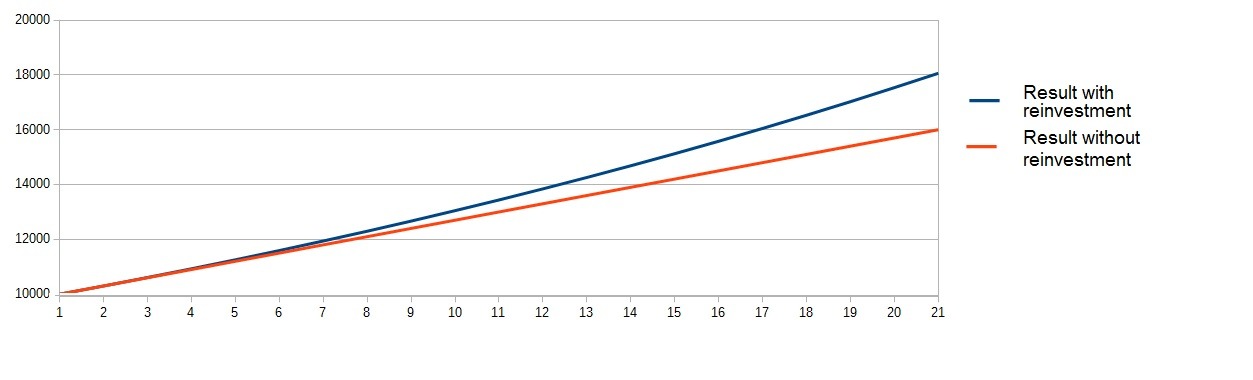
What Is a Dividend Reinvestment Plan (DRIP)? Complete Guide to Automatic Dividend Investing
Discover how dividend reinvestment plans (DRIPs) enable commission-free stock accumulation through automatic reinvestment, fractional shares, and compounding growth for long-term investors.
2025.12.11
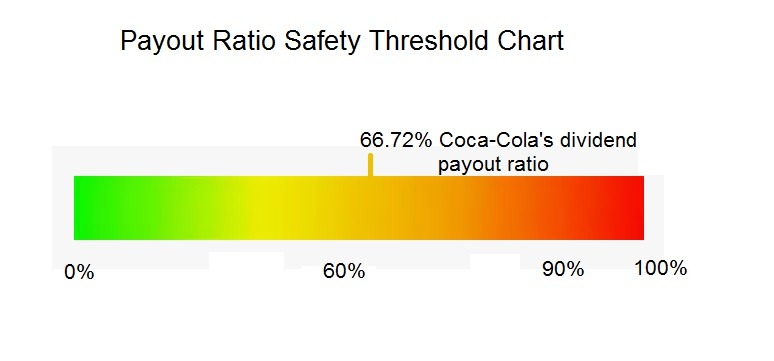
How Much Dividend Does Coca-Cola Pay? $2.04 Annual Yield Analysis (2025)
Coca-Cola pays $2.04 annual dividend per share with 3.03% yield. Discover KO's 53-year aristocrat track record, quarterly payments, and dividend safety analysis
2025.12.01

The top choice for institutional investors and financial professionals.
All Set