

- Recession-proof stocks include those in the basic consumer staples, utilities and healthcare sectors. Understanding the best recession proof stocks 2025 has to offer is essential, as the demand for such goods and services is not affected by the economic cycle.
- Recession-resistant sectors are those that tend to withstand financial storms, high interest rates, trade wars and other challenges. This is achieved by working in defensive sectors, as well as through high cash flow margins, low debt levels and a strong market presence.
- Defensive stocks tend to experience smaller declines during economic downturns and recover more quickly at the start of stabilization periods. Investors use them to mitigate the risk of their portfolios.
This article will explore which industries are considered defensive and what stocks to buy in a recession.
Table of Contents
Best Recession Proof Stocks 2025: My Top 10 Picks
Johnson & Johnson is classified as a defensive stock for two reasons. The first is the stable demand for its pharmaceutical and medical products. The second is its conservative use of debt.
Abbott Laboratories is a well-diversified company, operating in the fields of medical devices, pharmaceuticals and food products. This enables the company to maintain stable cash flow margins throughout the economic cycle.
Procter & Gamble is among the best recession stocks. The company offers a wide range of consumer products. P&G’s product range includes items in various price categories and packaging sizes. This helps to sustain overall demand in the event that consumers switch to cheaper brands.
Walmart is a chain of grocery and department stores offering discounted goods at affordable prices. The company benefits from an economic slowdown, as its customer base expands to include people who start saving.
Dollar General is another retailer that benefits from consumers’ desire to buy discounted products. The company sells food, cleaning supplies and clothing from well-known brands and its own label at attractive prices. Over the past 10 years, its dividends have increased 2.5-fold.
Costco offers bulk shopping at competitive prices. The company operates on a membership basis. There is an increase in membership renewals during periods of economic downturn. Other positive factors include global expansion and a robust digital strategy.
PepsiCo is one of the best stocks during recession (recession-resistant stocks). The company offers beverages and food products. Thanks to its strong brands, its sales only decreased by 0.5% during the 2008–09 crisis, and revenue actually grew in 2020. Another advantage is its low debt levels.
McDonald’s is also a stock to buy during recession. The company’s advantage lies in its franchise operations: franchisees cover all inflation-sensitive expenses. Meanwhile, McDonald’s owns the real estate on which its restaurants are built. The company generates earnings from rent and royalties as a percentage of sales.
Another category of stocks to buy during recession is utilities companies. A notable example is NextEra Energy, which owns a major electricity company in Florida and a leading energy resource production enterprise. NextEra Energy benefits from rising regulated tariffs set by the government.
In answer to the question of what stocks go up in a recession, communication service providers can be mentioned. Verizon is one of the largest providers in the US. Thanks to tariff plans and service sales that are necessary for consumers even during crises, the company receives a stable income.
Best Recession Proof Stocks 2025 for Dividend Income Security
During a recession, the focus shifts towards business quality and income stability. The best stocks to buy in a recession possess the following characteristics:
- A moderate payout ratio. An optimal ratio is below 75%. However, some industries are characterized by higher or lower ratios.
- Strong balance sheets.
- Stable free cash flow that covers dividends.
- Low levels of debt.
Dividend Aristocrats are a good example of recession-proof stocks with dividends. These are companies that have increased their dividends for at least 25 years. In order to be included in the S&P 500 Dividend Aristocrats Index, a company must also meet certain requirements relating to market capitalization, free float and trading volume.
In the US stock market, there is another category of stock recommended for income investing: Dividend Kings. These are companies that have increased their dividends for over 50 years. Examples include Johnson & Johnson, which has a streak of 62 years of continuous dividend growth, Coca-Cola (61 years), and Procter & Gamble (68 years).
Healthcare: Essential Services in Any Economy
Demand for healthcare services and medical devices is not considered discretionary. Demand for these does not decline during periods of crisis. In fact, the need for pharmaceuticals and medical devices increases as the population ages.
Approximately 60% of hospital revenues originate from government programmes such as Medicare and Medicaid. The FDA approval process also helps to create conditions for predictable industry growth. The healthcare sector shows high recession resistance. In 2020, it declined by 22%, compared to 34% for the S&P 500.
The graph below shows the dynamics of the S&P 500 and SIXV (The Healthcare Select Sector Index) since 2020.
In addition to Johnson & Johnson, investors may wish to consider other pharmaceutical companies. Pfizer, for example, owns several of the world’s best-selling pharmaceutical brands and vaccines. It has achieved dividend growth for 14 consecutive years.
UnitedHealth Group is an example of a healthcare stock. UNH provides healthcare services based on information and technology, as well as health insurance and social services. The company has increased its dividends for 15 consecutive years.
Consumer Staples: Necessities That Drive Consistent Demand
The Consumer Staples Sector offers many recession stocks that pay dividends. This is due to the inelastic demand for food and beverages, as well as household necessities. Furthermore, consumer staples tend to be strongly influenced by brand loyalty.
Earlier, we discussed consumer staples stocks, such as Procter & Gamble and PepsiCo, and retail chains offering consumer products at competitive prices, such as Walmart and Costco.
Another producer of consumer staples is Coca-Cola. Thanks to its strong brands and loyal consumers, the company is able to raise prices in line with inflation. Its broad market diversification protects it from adverse economic conditions in individual regions.
Another example of a company with recession proof stocks is General Mills. Its brands are present in 95% of US households. Demand for food remains stable or even increases during a recession, as people eat more at home to save money.
Utilities: Steady Revenue Streams Through Economic Cycles
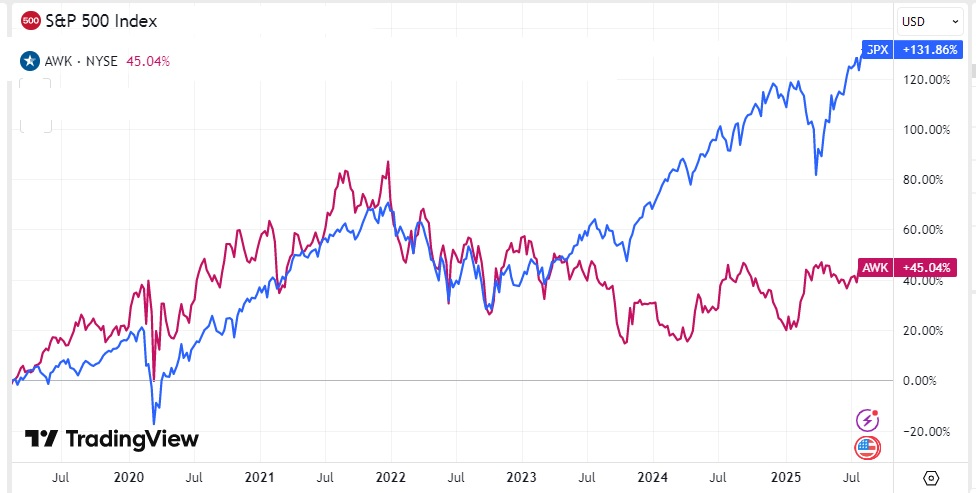
Due to their predictable revenue, securities issued by utility companies are considered to be recession-resistant stocks. The Public Utility Commission regulates electricity, natural gas, telecommunications and water supply. Long-term contracts for essential services make the Utilities Sector an attractive investment option for those seeking stable dividend income.
In addition to NextEra Energy, other utility companies worth considering include Duke Energy. The company operates in the south-eastern and mid-western United States. Around 90% of its revenue comes from regulated businesses. It has achieved 20 consecutive years of dividend growth. Of the listed companies, DUK has the highest dividend yield at 3.51%.
Another example is American Water Works. It is a leading national water supply and sewage company. It has grown its dividends for 16 consecutive years.
Discount Retailers: Benefiting From Consumer Budget Consciousness
A wide range of recession stocks is offered by the Retail Sector. Firstly, this includes discount retailers. Their sales increase as consumer spending shifts towards budget-conscious options.
As well as Costco, which has already been talked about, other stocks that do well during recession in the consumer discretionary sector include:
- Dollar General offers a range of products tailored to the needs of families on a budget. In 2008, the company increased its sales by 12%.
- Dollar Tree is a chain of stores selling items for $1; the company does not pay dividends. However, as its beta coefficient is less than 1, its stocks can be used to reduce portfolio volatility.
- The TJX Companies group operates several off-price retail chains in the US. This retailer sells branded goods at significantly reduced prices.
Diversification: The Ultimate Recession-Proofing Strategy
According to Modern Portfolio Theory, diversification is the most effective way to reduce volatility and stabilize income. The first step is asset allocation. Capital is divided among different types of investment, such as:
- assets that generate fixed income;
- recession equities, i.e., securities that can outperform the market during economic downturns;
- growth stocks, necessary to increase the overall return of a diversified portfolio in the long term;
- gold and other alternative assets.
The asset allocation depends on the investor’s risk tolerance, investment horizon and current income needs. The primary objective of a diversified portfolio is to strike the right balance between the required return and the acceptable level of risk.
Common Mistakes to Avoid When Recession-Proofing Your Portfolio
Finding the answer to the question ‘What stocks do well during a recession?’ is not enough. It is also important to learn how to avoid making investment mistakes. The most common mistakes include:
- Market Timing.
- Panic Selling during periods of declining prices and euphoric buying at the peak.
- Excessive concentration in high-yield stocks. Companies that issued such stocks may sharply cut back dividend payments during a recession.
- Refusal to rebalance the portfolio.
Long-term statistical studies of the American market demonstrate that regular investment is more effective than market timing. Most amateur investors risk losing capital by selling stocks once a decline has begun, only to buy them back at the ‘bottom’.
Another important aspect is rebalancing. This involves reducing portfolio volatility and returning asset allocation to its original distribution. Investors often refuse to do this due to their reluctance to buy fallen stocks and sell those that have appreciated. Studying Behavioral Finance can help to improve understanding of this issue and enhance discipline.
Conclusion: Balancing Protection and Growth Potential
Long-term investing assumes that the portfolio must withstand testing through multiple market cycles. When selecting the best recession proof stocks 2025 has to offer, a long-term strategy should strike a balance between assets that offer protection and those that offer growth potential.
Balanced investing means that recession-proof stocks form a permanent part of the portfolio. Historical data shows that the most advantageous dollar-cost averaging of the position is achieved through a disciplined approach and regular purchases.
In order to identify stocks to buy during recession, investors need to have a good understanding of the fundamental factors involved. A combination of financial discipline and thorough analysis will help to create a resilient portfolio that is at an acceptable level of volatility.
Frequently Asked Questions about Recession-Proof Investing
Here is an overview of the recession-proof stocks FAQ. The most common question from beginners is: when to buy recession-proof stocks? Financial advisors assert that it is more advantageous to gradually increase positions in the best performing stocks in recession than to make a sudden shift in the portfolio balance once an economic downturn has begun.
The safest investments during recession are in companies that operate in the healthcare sector or produce essential consumer goods and services.
An important part of the answer to how to prepare for a recession is purchasing fixed income assets. During a crisis, these assets provide a stable cash flow. This gives investors the funds to increase their positions at favourable prices, as well as providing psychological support.
Another question relates to the fact that the stocks that do well in recession tend to underperform in a bull market. This is indeed true. Therefore, it is important to diversify your portfolio and not only hold defensive assets.
FAQ
What stocks do well in a recession?
Stocks of companies with stable, inelastic demand for services that people need, even during a recession, produce the best results.
Which industries are typically recession-proof?
These include sectors like healthcare, utilities, as well as the production and sale of essential consumer goods – such as food, hygiene products, and others.
How do I build a recession-proof stock portfolio?
It is advisable to buy recession stocks at the first signs of an economic downturn. At the same time, it is important to pay attention to all asset classes and sectors, and to maintain diversification within them.
What makes a stock recession-proof?
A company’s resilience is ensured by a business model that maintains and increases demand for its services during crises. Other important factors include financial health and low levels of debt.
How important is diversification during a recession?
During a recession, diversification becomes extremely important. It helps to mitigate the negative impact on a portfolio.
How did recession-proof stocks perform during past recessions?
Even during bull markets, most recession proof stocks performed well. Many of these companies increased their dividends and simultaneously grew their market capitalization. However, their growth rates were lower than those of many cyclical companies.
Where is money safest in a recession?
The safest assets during a recession are those with the lowest risk of loss, such as government bonds, money market funds and savings certificates. Even the best stocks for recession scenarios can lose a significant proportion of their value.
Do recession-proof stocks underperform during bull markets?
Yes, defensive assets tend to underperform compared to growth companies during bull markets.
Are ETFs a better option than individual stocks for recession protection?
ETFs offer a quick way to diversify a portfolio and reduce its volatility. During recessions, ETFs that invest in defensive sectors can be used to mitigate the risks associated with individual issuers.
Can international stocks be considered recession-proof?
Foreign stocks are susceptible to recessions, but they can be used to create a diversified portfolio. As business cycles differ across countries, foreign stocks may be uncorrelated with the US market.
How often should I rebalance my portfolio of recession-proof stocks?
Some investors rebalance regularly, for example once a year, while others do so when their strategy’s maximum allowable deviation from the initial asset allocation is reached.
How do rising interest rates affect recession-proof stocks?
Although high interest rates are unfavourable for any business, their negative impact on the best recession-resistant stocks is minimal due to the low debt levels and high credit ratings of defensive companies.
Can technology stocks be recession-proof?
The technology sector is not considered to be either resilient or defensive. While some of its representatives performed well during the 2020 crisis, this was due to the benefits they gained from the global quarantine period.
Article Sources
- Recession-proof Investing For Tangible Wealth Creation. Corns Elba.
- Recession-Proof investing for beginners. Will Weiser.
- Industries That Thrive During Recessions.